← Longevity & Supplement Guides
Ultra-Processed Food, Without the Panic

In 2019, twenty people agreed to live inside a research ward at the National Institutes of Health and eat only what they were handed. For two weeks they ate meals built from ultra-processed foods; for another two weeks, meals built from whole ingredients. The plates were matched on paper — the same calories on offer, the same balance of carbohydrate, fat, sugar, sodium, and fibre. The volunteers were told to eat as much or as little as they liked. And on the ultra-processed fortnight, they quietly ate about 500 calories a day more, and gained weight.
Nobody smuggled in a poison. The food was engineered to disappear, and it did.

The experiment that changed the argument
For years, the case against ultra-processed food was made almost entirely from observational data: people who ate more of it tended to be less healthy, but you could never be sure the food was the cause rather than a marker of everything else about a hurried life. Kevin Hall's inpatient trial, published in Cell Metabolism, was the first to test it under lock and key. Because the two diets were matched for the things nutritionists usually blame — sugar, fat, salt, fibre, calorie density on the plate — the extra 500 calories a day had to come from something about the processing itself. That is a rare thing in nutrition science: not a correlation, but a controlled effect you can watch happen.
What "ultra-processed" actually means
The term comes from a system called NOVA, which sorts food not by nutrients but by how far it has been transformed — from whole ingredients, through basic cooking, to "formulations of ingredients, mostly of exclusive industrial use." In practice that last bucket is enormous, and this is where honesty matters. A fizzy drink and a fortified wholegrain cereal can both land in it, and they are plainly not the same thing. Critics have argued, fairly, that NOVA is fuzzy at the edges and that some of the harm blamed on "processing" is really just the sugar and salt riding along inside. The three-paper series The Lancet ran in late 2025 spent much of its length arguing over exactly this. The category is a useful flashlight, not a scalpel — and anyone selling you a clean line between good and evil food is overselling.
Why the calories quietly add up
So why do people overeat it? The obvious suspects are energy density and hyper-palatability — a lot of calories per soft, fast-to-eat bite, tuned to a sweet-salt-fat spot the body rarely finds in nature. A 2025 reanalysis of Hall's original trial in the American Journal of Clinical Nutrition added a subtler idea. The whole-food meals were about 57% larger by mass yet carried roughly 15% fewer calories, because to hit their vitamin and mineral targets, eaters instinctively reached for bulky, low-calorie things — vegetables, fruit. The authors call this a kind of nutritional intelligence: appetite chasing nourishment, then stopping. Ultra-processed food short-circuits it by fortifying calorie-dense products, so you meet the micronutrient quota long before your stomach has done any real work. The reanalysis could account for close to 88% of that daily calorie gap.
The metabolic-ward result
Same calories offered. Different calories eaten.
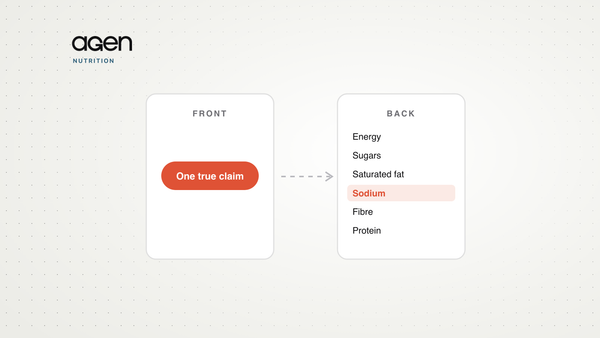
What was held equal between the two diets?
Source: Hall et al., Cell Metabolism, 2019 (n=20, inpatient randomized crossover). A small, tightly controlled trial — illustrative of a mechanism, not a life expectancy.
The signal that shows up in your biology
Beyond the ward, the long-range picture comes from population cohorts, and here the rules change: these are associations, not proof. Still, they are large and consistent. A 2025 GeroScience analysis of 172,225 people in the UK Biobank, followed for a median of nearly twelve years, found that the heaviest ultra-processed eaters (more than eight servings a day) carried about a 15% higher risk of dying in the follow-up window than the lightest (HR 1.15). What makes that study interesting to us is where the association hid: roughly 14% of it was statistically explained by biological ageing — a composite of blood markers that estimates how old your body is running, regardless of the birthday. Diet, in other words, leaves a fingerprint you can measure before anything goes visibly wrong. That is the whole premise of paying attention to the biomarkers that actually matter.
How to think about it without the panic
The wellness internet loves this topic because it flatters two impulses at once — fear and virtue. But the vocabulary of "toxins" and "detoxes" overshoots the science badly, and rigid purity is its own kind of stress. The evidence points somewhere calmer. The lever is not chemical fear; it is the food matrix and the friction of eating. Whole and minimally processed foods make you work a little — chew, slow down, fill up on volume — and that work is doing something. You do not need a spotless diet. You need most of your meals to be things your grandmother would recognise as food, and you can stop litigating the rest.
Supplements sit alongside that, not instead of it: they fill genuine gaps in an otherwise whole-food diet, which is a smaller and humbler job than the label industry likes to admit. The same restraint applies to the two dietary levers most tangled up with processed food — steadier energy through the day and enough fibre to feed a gut microbiome. And if you are choosing where to put effort, protein and plants tend to crowd out the engineered stuff without you having to forbid anything. If you want to see whether any of it is landing, the honest move is to measure trends over time rather than judge a single day — the sort of thing an Agen Band and a simple longevity protocol are built to make boring and routine.
The bottom line
Ultra-processed food is not poison, and it is not a moral test. It is engineered to be eaten past the point where you would otherwise stop — and under controlled conditions, that is exactly what it does. You do not need to fear it or fetishise its opposite. Eat mostly food that asks something of you, measure what you can, and let the numbers correct the fantasy rather than replace the meal.