← Longevity & Supplement Guides
Ashwagandha: What the Evidence Actually Says

Ashwagandha (Withania somnifera) is one of the most popular herbs in the supplement world, and one of the most heavily marketed. Because it's a botanical, regulators in the EU and UK have not authorized specific health claims for it — most botanical claims sit "on hold" — so this guide stays deliberately factual and educational rather than promising outcomes. The aim is to help you read the category with clear eyes.
What ashwagandha is
Ashwagandha is a small shrub native to India, the Middle East, and parts of Africa, whose root has been used for centuries in traditional Ayurvedic practice. Marketing tends to call it an "adaptogen," a popular term for substances said to help the body cope with stress — but "adaptogen" is a marketing and traditional-use category, not an authorized regulatory claim. The root contains compounds called withanolides, and most standardized extracts are measured by their withanolide percentage.
One practical point trips people up: not all "ashwagandha" is the same. Products differ in which part of the plant is used (root versus leaf), how the extract is standardized, and at what dose — so two supplements sharing the name can be quite different products. That variability is part of why the research resists a tidy summary, and why the extract specification on the label matters more than the herb's name.
Traditional use and current research
Ashwagandha has a long traditional history, which is why it appears in so many modern formulas. Contemporary research is ongoing and interest is high, but the evidence base is still developing: many studies are small, short, use different extracts and doses, and vary in quality, which makes firm conclusions difficult. Because no health claim is authorized for it in the EU or UK, we describe what it is and how people use it — without stating or implying that it treats stress, anxiety, sleep problems, or any condition. A product making confident disease-related promises about ashwagandha is showing you a red flag, not a feature.
A little vocabulary helps you navigate the shelf. Most quality products are built on a standardized extract rather than raw powder, and you'll often see branded extracts named on the label — each standardized to a particular withanolide content and studied at its own dose. The number that follows ("standardized to 5% withanolides," for instance) is more informative than the herb's name, because it's the thing that's actually consistent from batch to batch. Dose ranges in the research vary widely, which is another reason to distrust any product that implies a single universal answer. When the science is still settling, specificity on the label is the closest thing to honesty.
Reading the label, not the hype
How to judge any botanical claim
✓ Green flag — a defined, standardized extract
✓ Green flag — transparent dosing and third-party testing
✕ Red flag — confident disease or "cortisol" promises
✕ Red flag — "clinically studied" doing a lot of lifting
How to choose a product
- Standardized extract — a defined extract with a stated withanolide percentage, so you know what you're getting.
- Transparent dosing — the actual amount per serving, not a hidden blend.
- Quality and purity testing — third-party testing for heavy metals and contaminants.
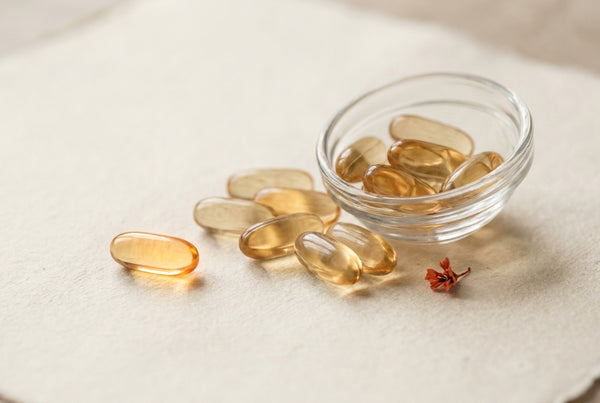
- Sensible format — capsules with a clear extract spec are easier to judge than blends where ashwagandha is one unquantified name among many.
You can see Agen's liposomal ashwagandha or browse the rest & recovery range. If your interest is the evening routine more broadly, our sleep and recovery guide sets calming botanicals in the wider context of sleep habits — where behaviour matters far more than any single ingredient.
Who should be cautious
Ashwagandha is not right for everyone. People who are pregnant or nursing should avoid it. Anyone with a thyroid condition, an autoimmune condition, or who takes sedatives, thyroid medication, or immune-modulating drugs should speak to a doctor first, as the herb may interact. There have also been isolated reports of liver-related effects, so stop use and seek medical advice if you feel unwell. As with any botanical, "natural" does not automatically mean risk-free.
How to think about botanicals generally
Ashwagandha is a useful case study for the whole category. The honest approach: judge products on transparency and testing, keep expectations modest because the evidence is still maturing, don't lean on a single herb to solve a problem that's really about sleep, stress load, or lifestyle, and always factor in your own health situation and medications. Botanicals can be a reasonable part of a routine for some people — but they're a supplement to good habits, not a shortcut around them.
The bottom line
Ashwagandha is a widely used herb with a long traditional history and a developing modern research base, but no authorized health claim in the EU or UK — so treat confident marketing promises with skepticism. Choose a standardized, third-party-tested product with transparent dosing, and talk to your doctor before using it if you're pregnant, nursing, have a thyroid or autoimmune condition, or take medication.