← Longevity & Supplement Guides
Circadian Rhythm: How Light Sets Your Body Clock

You don't have one body clock; you have billions. Nearly every cell keeps its own roughly 24-hour rhythm, and a master clock in the brain keeps them loosely in sync — deciding when you feel alert, when you get sleepy, when your body temperature dips, when hormones rise and fall. Most people fight this system without realising it, then wonder why sleep is hard and mornings are worse. Understanding the clock, and the one signal that sets it, is the highest-leverage thing you can do for sleep that doesn't involve a single supplement.
You have a clock in every cell
The master clock sits in a tiny region of the brain called the suprachiasmatic nucleus, and it orchestrates the daily rhythms running throughout your body. Left alone in a cave with no time cues, this clock runs a touch longer than 24 hours — which means it needs a daily nudge to stay aligned with the actual day. That nudge is the whole story. Get it right and the system runs smoothly; get it wrong and everything downstream — sleep timing, energy, appetite, mood — drifts out of phase.
Light is the master signal
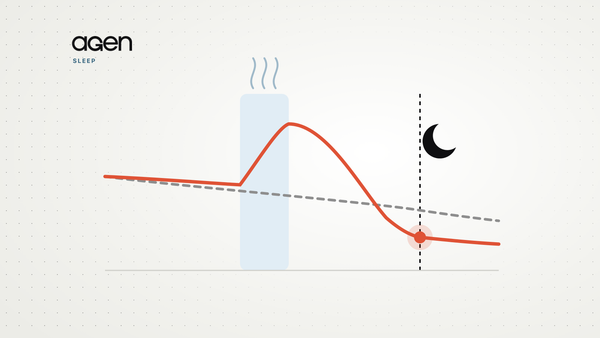
Of all the cues that set the clock, light is by far the strongest. Special receptors in your eyes report the brightness of your environment straight to the master clock, and it uses that information to decide what time it thinks it is. The practical consequences are precise: bright light in the morning anchors and slightly advances the clock, telling your body the day has started and making it easier to sleep that night. Bright light in the evening does the opposite — it delays the clock and pushes your natural sleep time later. This is why a few minutes of outdoor light after waking, and dimmer light in the hours before bed, does more for sleep than almost anything you can buy.
The clock runs on light
One day, and where light helps or hurts
Why consistency beats duration
People obsess over how many hours they sleep and neglect the more powerful variable: when. A clock stays well-set when it's cued at the same times every day, so a consistent wake time — even on weekends — stabilises the whole system, while a wildly variable schedule keeps it perpetually guessing. If you fix one thing, fix your wake time and get light soon after; bedtime tends to fall into place behind it. Regularity, it turns out, is a sleep aid in its own right.
The other cues: food, movement, temperature
Light leads, but it isn't alone. Meal timing, physical activity, and temperature are secondary cues the clock also reads. Eating very late sends a "still daytime" signal to the body's peripheral clocks; morning or daytime movement reinforces the wake signal; and a natural evening dip in core body temperature helps sleep begin, which is part of why a cool room helps — see our guide to the best bedroom temperature. Align these with the light-set clock and they compound; scatter them and they add noise.
Larks, owls, and working with your type
Not everyone's clock is set to the same hour, and that's not a character flaw. Your chronotype — whether you're naturally a morning lark or a night owl — is substantially genetic, which is why forcing a committed owl into a 6am schedule tends to produce a chronically under-slept, out-of-phase person rather than a reformed early riser. You can nudge a chronotype somewhat with disciplined light exposure and consistent timing, but you can't fully override it. The productive move is to work with your type where life allows — schedule demanding work for your natural peak, protect the sleep window your body actually wants — and, where it doesn't, lean hard on morning light and a fixed wake time to drag the clock as close to your obligations as it will go. Fighting your biology head-on is a losing strategy; negotiating with it isn't.
Social jet lag and the weekend trap
Here's the modern failure mode. Through the week you wake to an alarm; on weekends you sleep in for hours. That swing — "social jet lag" — is, to your clock, indistinguishable from flying across time zones every Friday and back on Monday. Monday feels awful because, circadian-speaking, you are jet-lagged. The fix isn't heroic: keep your wake time within about an hour across the whole week, and if you're short on sleep, a short early-afternoon nap beats a long weekend lie-in that shoves your clock out of phase again.
The bottom line
Your body runs on a clock that expects a regular day, and light is the signal that sets it: bright light early anchors it, bright light late delays it, and a consistent wake time keeps the whole system stable. Get outdoor light after waking, dim things down in the evening, keep meal and movement timing regular, and resist the weekend swing. It costs nothing and outperforms most sleep products. Next, see how sleep itself is structured in the sleep stages explained, and how caffeine interacts with all of this. Educational only, not medical advice.