← 长寿与补充剂指南

The Night Shift: What Deep Sleep Does to Your Body

Sleep6 分钟阅读 Jul 9, 2026更新于 Jul 3, 2026
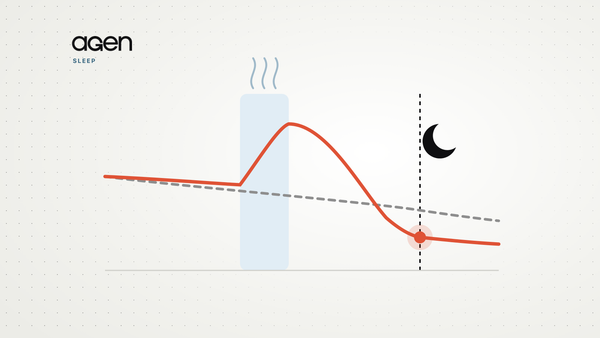
Illustration of a night's hypnogram with the largest growth-hormone surge marked during the first deep-sleep period.

Somewhere in the first ninety minutes after you fall asleep, before the dreams turn vivid, your body clocks in for the most important shift of its day. You are not awake to supervise it. That is rather the point.

We spend our daylight hours optimizing the visible things — the workout, the protein, the cold plunge, the ring on the finger. But the work that actually rebuilds the body happens later, in the dark, while we are unconscious and unmeasured. A study reported this summer put a precise mechanism to that old intuition. It is worth understanding — not because it changes what you should do, but because it explains why the boring advice keeps winning.

What "deep sleep" actually is

Deep sleep — slow-wave sleep, the deepest stage of non-REM — is the part of the night when your brain waves slow and broaden, your heart rate and breathing settle, and you become genuinely hard to wake. It is front-loaded: most of it arrives in the first half of the night, which is why an honest bedtime tends to carry more of it than a long, late lie-in. If you want the full map of the stages your brain moves through, we covered it in the sleep stages explained. The short version: deep sleep is not rest in the sense of doing nothing. It is when a great deal of the body's maintenance gets scheduled.

The circuit scientists just mapped

For decades, researchers have known that the body's largest daily pulse of growth hormone arrives during deep, non-REM sleep — but not exactly how the brain arranged the timing. A team led by Yang Dan's laboratory at UC Berkeley, publishing in Cell, described the wiring in mice. Two chemical signals in the hypothalamus behave like a gas pedal and a brake: growth-hormone-releasing hormone (GHRH) and somatostatin. During deep sleep the brake eases off while the accelerator rises, and growth hormone surges. The researchers also traced a feedback loop running back toward the brainstem regions that govern arousal — a hint that sleep and this hormone manage each other, rather than one simply commanding the other.

Sleep architecture

Deep sleep is front-loaded — and so is the repair

Awake REM Light Deep GH surge Bedtime Wake
Sleep depth across the night Largest growth-hormone surge
Illustrative hypnogram, not your actual night. Deep (slow-wave) sleep clusters in the first half of the night, which is when the body's biggest growth-hormone pulse tends to arrive. Late, irregular nights tend to trim the deepest stage first.

Why the repair gets done at night

Growth hormone is one of the body's normal signals for building and maintaining tissue. It plays a part in how the body supports muscle and bone and how it handles fat and energy overnight. Concentrating its biggest release into deep sleep is an elegant piece of scheduling: the demanding, resource-hungry work of repair happens when you are still, fed, and off your feet. It is the reason "you grow while you rest" is more than a gym slogan. The stimulus is the training and the raw material — a reason to keep strength training after 40 and to hit your protein for longevity, with minerals like magnesium, which contributes to normal muscle function, in the supporting cast. The construction crew, though, shows up at night.

What this does — and doesn't — prove

Here is where skepticism earns its keep. This was a study in mice, mapping a circuit — not a trial showing that any supplement, gadget, or bedtime ritual raises human growth hormone or changes your body composition. The mouse hypothalamus is a fair model for this kind of wiring, and the human link between deep sleep and growth-hormone release has been established for years. But "we found the switch in mice" is not "here is how to flip it in you." Be wary of anyone who reads a mechanism paper and comes back selling a way to hack your hormones overnight. The honest takeaway is humbler, and older: protect the deep sleep you already have.

How to protect your deep sleep

The evidence for guarding slow-wave sleep is unglamorous and consistent. Most of it comes down to five habits:

  • Keep your timing regular. Going to bed and waking at similar times steadies the architecture of the night. It turns out regularity may matter as much as duration.
  • Respect the first half of the night. Because deep sleep clusters early, a chaotically late bedtime tends to cost you the deepest stage first.
  • Cool the room. A slightly cool bedroom supports the drop in core temperature that deep sleep rides in on — here is the best bedroom temperature for sleep.
  • Mind the last drinks. Alcohol near bedtime fragments sleep and blunts the deep stages, and caffeine lingers longer than most people think.
  • Move during the day. Regular exercise is associated with more slow-wave sleep — one more reason the training and the sleeping reinforce each other.

None of this is exotic. That is the feature, not the bug.

Measuring the invisible

You cannot feel a growth-hormone pulse, and you cannot will yourself into slow-wave sleep. But you can watch the trend. A wearable's "deep sleep" estimate, or the overnight readouts in the Agen app, will not match a sleep lab minute for minute — read them as a trend to notice, not a diagnosis. Used that way, the numbers do the one job numbers are good for: they correct fantasy. If you are convinced you sleep well but the trend says your nights have been short and ragged for a month, that is worth knowing. If your HRV has been drifting down alongside it, the two are probably telling the same story — and a good clue about when to push or rest.

The bottom line

The Berkeley study is a satisfying piece of basic science: it names the circuit behind something your body has been doing quietly every night of your life. It does not hand you a new lever. It hands you a better reason to respect the one you already have. Deep sleep is not downtime you can borrow against — it is the shift when you get rebuilt. Guard the first half of the night, keep your timing honest, and let the crew do its work.